


Patients from Dallas, Plano, Frisco, Fort Worth, and beyond travel to see Dr. John Peloza for expert evaluation and advanced spine care.
At his Plano office, Dr. Peloza offers artificial disc replacement for select patients with cervical or lumbar disc conditions who may benefit from a motion-preserving alternative to spinal fusion.
Artificial disc replacement removes a damaged disc and replaces it with an implant designed to maintain movement at the treated level. For appropriately selected patients, this approach can relieve pressure on spinal nerves while preserving more natural spinal motion.
Dr. Peloza has devoted much of his career to motion-preserving spine surgery and takes an individualized approach to treatment. He carefully evaluates the source of each patient’s symptoms, spinal anatomy, stability, alignment, and overall goals before determining whether artificial disc replacement, fusion, a hybrid procedure, or another treatment offers the best option.
Request a consultation with Dr. Peloza to learn whether artificial disc replacement may be appropriate for you.

Dr. John Peloza is a board-certified orthopedic spine surgeon with more than three decades of experience in spine surgery. Throughout his career, he has focused on motion preservation, minimally invasive techniques, and advanced approaches to cervical and lumbar disc disease.
Dr. Peloza was an early adopter of artificial disc replacement and has participated extensively in clinical research and the development and evaluation of spine technologies. He has served as a principal investigator in more than two dozen FDA-regulated clinical trials and holds 16 patents related to spinal devices and procedural technologies. His work has helped advance artificial disc replacement and other motion-preserving approaches, and he has trained hundreds of surgeons in these techniques.
That experience also shapes how Dr. Peloza approaches each patient. Artificial disc replacement is not automatically the right choice simply because a disc is damaged. He considers the source of the patient’s symptoms, imaging findings, spinal alignment and stability, bone quality, prior treatment, and the condition of adjacent spinal levels before recommending a procedure. When appropriate, the treatment may be a single- or multilevel artificial disc replacement. In other cases, a hybrid procedure, decompression, minimally invasive surgery, fusion, or continued nonsurgical care may provide a better solution. The goal is to preserve healthy motion whenever the condition allows it while addressing the underlying cause of the patient’s symptoms.

Artificial disc replacement may be appropriate for patients whose symptoms come from one or more damaged cervical or lumbar discs and who still have spinal anatomy that allows motion to be preserved safely.
Dr. Peloza evaluates more than the appearance of the disc on MRI. He considers the location and cause of symptoms, spinal alignment and stability, bone quality, facet joint health, the number of affected levels, prior spine surgery, and the condition of the surrounding discs and joints. Significant instability, advanced facet degeneration, poor bone quality, or other structural problems may make a different procedure more appropriate.
Many candidates have already tried nonsurgical treatments such as medications, physical therapy, activity modification, or injections without lasting relief. The key question is not simply whether conservative care has failed, but whether the damaged disc can be identified as the source of the patient’s symptoms and whether replacing it is likely to address the problem while preserving useful motion.
Previous spine surgery does not automatically rule out artificial disc replacement. In some cases, Dr. Peloza may consider disc replacement at one or more levels or combine it with fusion as part of a hybrid procedure. Candidacy ultimately depends on the individual anatomy and the goals of treatment.
Symptoms that may prompt an evaluation for artificial disc replacement include persistent neck or back pain, pain that radiates into an arm or leg, numbness or tingling, and reduced mobility or function. These symptoms do not necessarily mean that artificial disc replacement is appropriate. Dr. Peloza evaluates whether they can be traced to a damaged or degenerative disc and whether the affected spinal level can be treated while preserving motion safely.
Request Consultation

Artificial disc replacement can be performed in either the cervical spine in the neck or the lumbar spine in the lower back. The goals are similar, but candidacy, anatomy, implant selection, and the conditions treated differ between the two regions.
Cervical disc replacement may be considered when a damaged disc in the neck causes persistent neck pain, arm pain, numbness, tingling, weakness, or spinal cord or nerve compression that has not responded adequately to nonsurgical treatment. The damaged cervical disc is removed and replaced with an artificial disc designed to preserve movement at the treated level. Depending on the patient’s anatomy, cervical disc replacement may be performed at one or more levels.
Lumbar disc replacement may be considered for select patients with chronic lower back pain associated with a damaged lumbar disc, particularly when nonsurgical treatment has not provided sufficient relief and the surrounding spinal structures remain suitable for motion preservation. Because the lumbar spine bears substantial loads, Dr. Peloza carefully evaluates factors such as facet joint health, spinal stability, alignment, bone quality, and the condition of adjacent levels before recommending lumbar artificial disc replacement.

For appropriately selected patients, artificial disc replacement can offer several important advantages. The procedure removes the damaged disc, relieves pressure on nearby neural structures when present, and preserves motion at the treated level rather than permanently eliminating it.
By maintaining movement, artificial disc replacement is designed to support more natural spinal mechanics and preserve function at the operated segment. This may help reduce the transfer of stress to nearby levels compared with fusion and can be especially valuable for active patients who want to maintain spinal mobility.
Potential benefits include preserved motion, maintenance of more natural movement, avoidance of fusion at the treated level, relief of symptoms caused by the damaged disc, and a return to normal daily activities after recovery.
For the right patient, these advantages can make artificial disc replacement a compelling option when motion can be preserved without sacrificing stability.
Request ConsultationArtificial disc replacement and spinal fusion can both treat painful or damaged spinal discs, but they use fundamentally different strategies.
Artificial disc replacement removes the damaged disc and replaces it with an implant that allows continued movement at the treated level. Spinal fusion removes motion at that level by joining adjacent vertebrae together to create stability.
For patients with suitable anatomy, preserving motion can offer important advantages. Maintaining movement at the treated segment may support more natural spinal mechanics and may reduce the additional stress that fusion can place on adjacent levels. Fusion, however, remains the better choice when the spine requires added stability or when factors such as severe facet degeneration, deformity, instability, or poor bone quality make motion preservation inappropriate.
Dr. Peloza does not approach the decision as artificial disc replacement versus fusion in the abstract. He evaluates the condition of each spinal level, the source of symptoms, alignment, stability, bone quality, prior surgery, and the health of surrounding structures to determine which approach best addresses the individual spine.
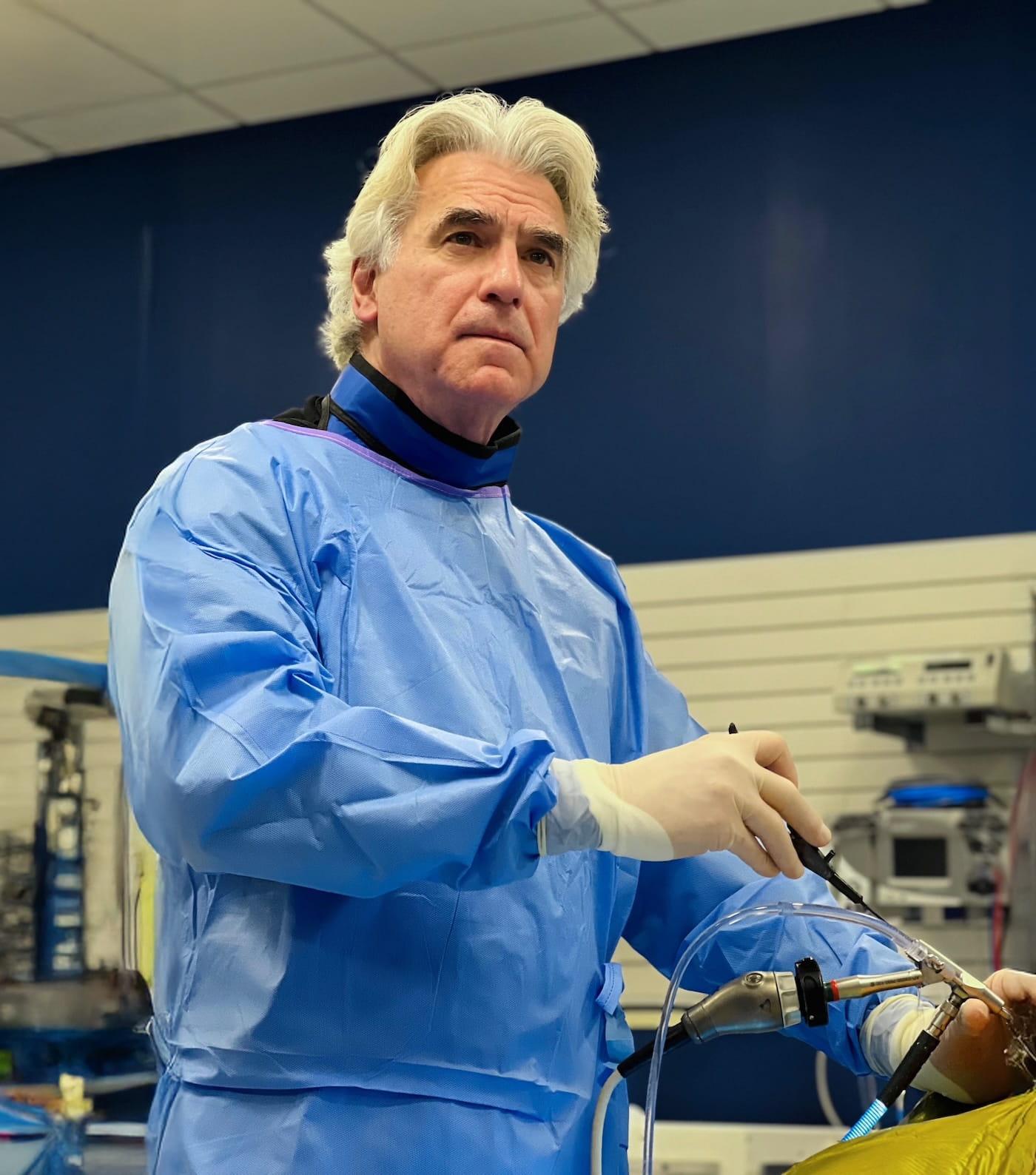
Artificial disc replacement can be performed at more than one spinal level in appropriately selected patients. The decision depends on the condition of each disc, the health of the facet joints, spinal alignment and stability, bone quality, and whether useful motion can be preserved safely at each affected level.
Not every level in the same spine needs the same treatment. One segment may be well suited for artificial disc replacement, while another may require fusion because of instability, advanced degeneration, deformity, or other structural concerns.
In these cases, Dr. Peloza may recommend a hybrid procedure that combines artificial disc replacement at one level with fusion at another. This approach allows him to preserve motion where appropriate while providing stability where necessary.
That principle reflects Dr. Peloza’s broader treatment philosophy: preserve healthy motion when the anatomy supports it, but do not sacrifice stability simply to avoid fusion. The goal is to tailor the reconstruction to the needs of each spinal level rather than apply a single solution to the entire spine.
Request Consultation
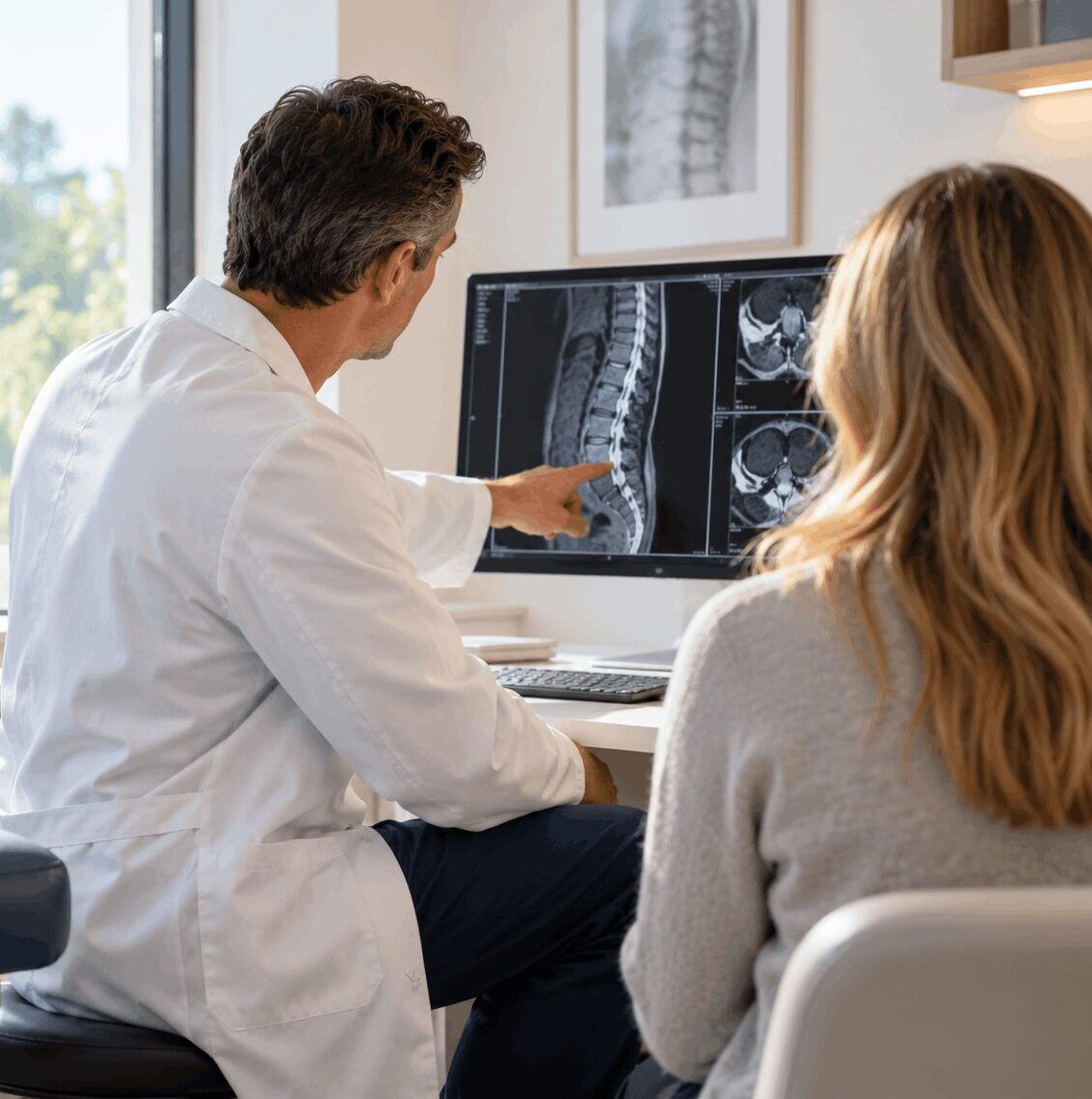
Before surgery, Dr. Peloza reviews the patient’s imaging, symptoms, medical history, prior treatment, and overall health to confirm the surgical plan and determine which spinal levels should be treated. Patients also receive specific instructions about medications, eating and drinking before surgery, and what to expect on the day of the procedure.
During artificial disc replacement, the damaged disc is removed, pressure on nearby nerves or the spinal cord is addressed when necessary, and an artificial disc is placed between the adjacent vertebrae. The goal is to treat the diseased disc while preserving motion at the operated level.
Recovery varies according to whether surgery involves the cervical or lumbar spine, the number of levels treated, the patient’s overall health, and the extent of the procedure. Follow-up visits allow Dr. Peloza to monitor healing, review imaging, assess symptom improvement, and guide a gradual return to activity.
Patients can learn more about typical milestones in our artificial disc replacement recovery timeline.
Research shows ADR can provide long-lasting improvements in pain, function, patient satisfaction and quality of life in appropriately selected patients.
For cervical disc replacement, a 2025 systematic review and meta-analysis of 17 randomized controlled trials with at least four years of follow-up found that cervical disc arthroplasty was associated with better neurologic success, greater preservation of motion, lower neck disability and pain scores, and lower rates of reoperation and adjacent-segment degeneration than anterior cervical discectomy and fusion.
Long-term data also support lumbar artificial disc replacement. A 2024 systematic review of 22 studies involving 2,284 patients found significant improvements in pain and disability that were maintained over a mean follow-up of 8.3 years. Across the included studies, the mean patient satisfaction rate was approximately 86%.
These outcomes reinforce the importance of proper patient selection. Dr. Peloza evaluates the source of symptoms, spinal alignment and stability, facet joint health, bone quality, prior surgery, and the condition of adjacent levels before recommending artificial disc replacement. For the right patient, artificial disc replacement can provide durable symptom relief while preserving motion at the treated level.
Artificial discs are designed for long-term use, and clinical studies have shown durable results for many years after surgery. How long an implant lasts can depend on the device, spinal level, patient activity, and individual anatomy.
Recovery varies by the spinal level treated, the number of discs replaced, and the patient’s overall health. Many patients resume light activities within days, followed by a gradual return to work, exercise, and other activities within weeks as healing progresses.
Yes. Some patients are candidates for artificial disc replacement at more than one level. Dr. Peloza evaluates each spinal level separately to determine where motion can be preserved safely and whether multilevel replacement or a hybrid procedure is appropriate.
Possibly. A recommendation for fusion does not automatically rule out artificial disc replacement. Dr. Peloza can review your imaging, symptoms, spinal stability, facet joints, bone quality, and prior treatment to determine whether motion-preserving surgery may be an option.
The best way to know is through a detailed spine evaluation. Dr. Peloza considers your symptoms, imaging, diagnosis, spinal alignment and stability, bone health, facet joints, prior surgery, and the number of affected levels before recommending artificial disc replacement.

If you are considering artificial disc replacement in Dallas, Plano, Frisco, Fort Worth, or elsewhere in North Texas, request a consultation with Dr. John Peloza. He can determine whether your symptoms are coming from a damaged cervical or lumbar disc and whether artificial disc replacement, fusion, a hybrid procedure, or another treatment best fits your spine.
Dr. John Peloza – Plano Office
5228 W Plano Pkwy
Plano, TX 75093
Phone: 972-250-5700
Whether you are seeking an initial evaluation or a second opinion after being told you need spinal fusion, Dr. Peloza can provide an individualized assessment of your options.
Request a consultation with Dr. Peloza to find out whether motion-preserving artificial disc replacement is right for you.
Your life awaits. Schedule your consultation at one of our premier locations today.
FOLLOW US ON SOCIAL MEDIA | @ADRSPINE