
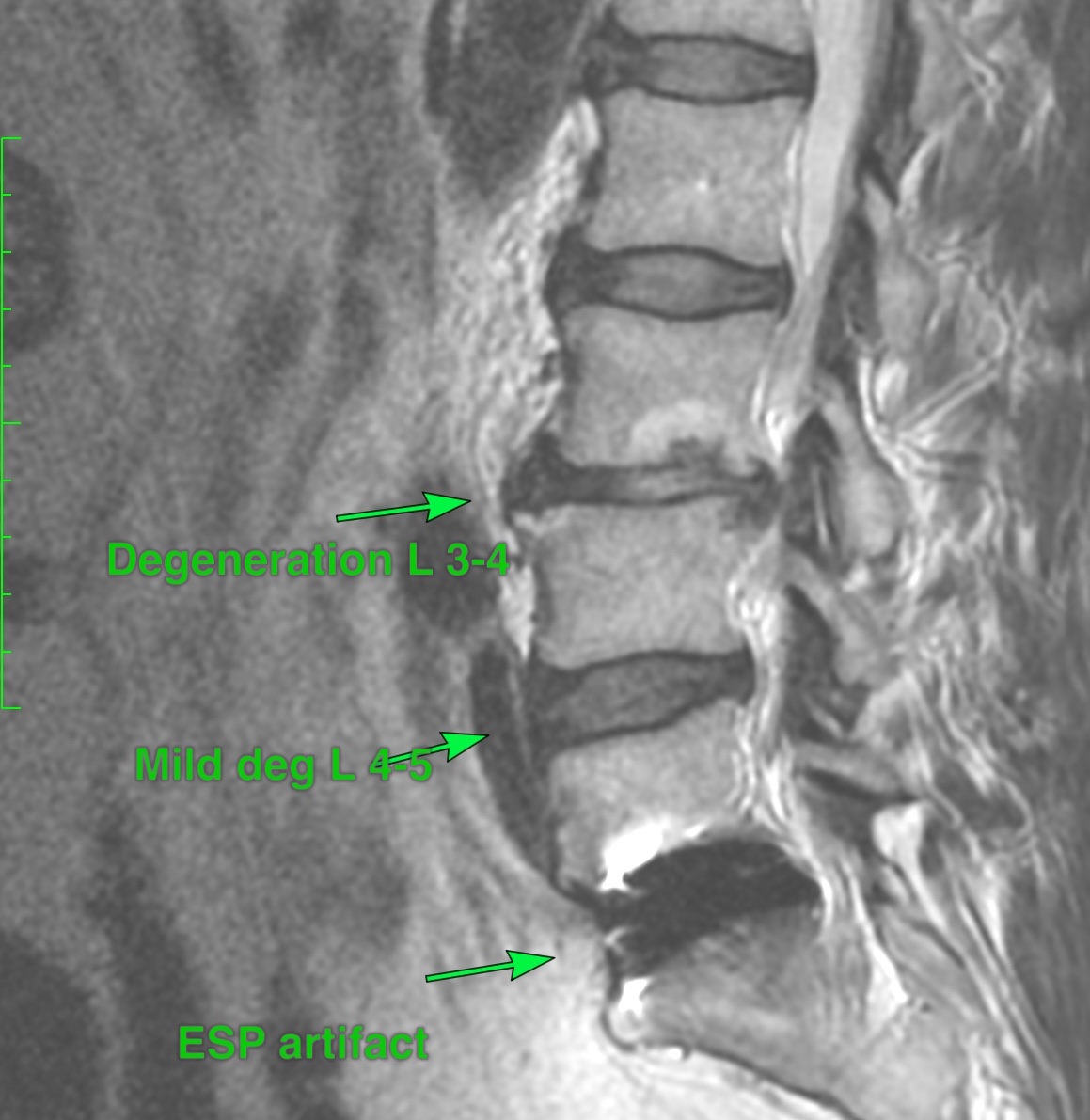
A 57-year-old man traveled to Germany in 2022 to undergo lumbar artificial disc replacement at L5-S1 using the ESP Disc, a viscoelastic-core implant not approved for use in the United States. Over the following three years, he developed progressively worsening mechanical low back pain. Nearly every movement became symptomatic, jarring activities produced severe pain, and he was forced to discontinue many of his normal daily activities. By the time he presented to our practice, he rated his pain as 9/10.
Advanced imaging demonstrated multiple factors contributing to his persistent symptoms. The L5-S1 implant was positioned left of midline and exhibited inadequate osseous integration. In addition, significant degenerative pathology was present at L3-4 and L4-5, neither of which had been addressed during the index procedure.
The implant design also warranted consideration. The ESP Disc utilizes a compressible viscoelastic polycarbonate-urethane core. While intended to replicate physiologic disc mechanics, this implant design has, in my experience, been associated with persistent mechanical back pain, suboptimal osseous integration, and implant-related complications requiring revision. I have similarly revised multiple lumbar and cervical viscoelastic-core devices, including the M6 disc, for comparable reasons.
Taken together, implant malposition, incomplete biological fixation, untreated adjacent- level pathology, and implant design limitations contributed to the patient’s ongoing symptoms and necessitated comprehensive revision surgery.
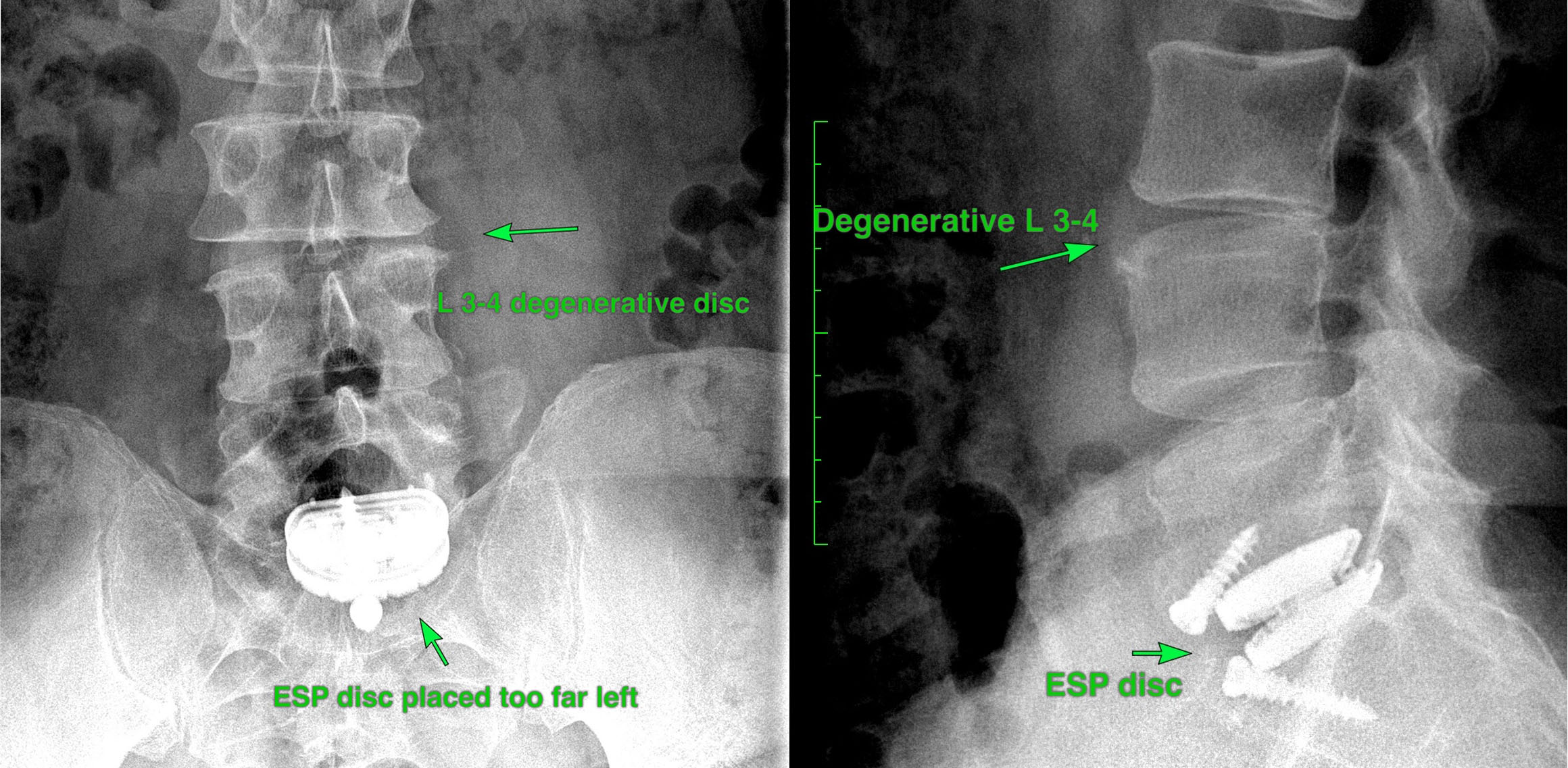 Pre-op
The patient wished to preserve lumbar motion and avoid spinal fusion whenever possible. Because the facet joints remained well preserved, he remained an appropriate candidate for revision arthroplasty.
The failed ESP Disc was explanted from L5-S1, and motion-preserving reconstruction was performed with ProDisc implants at L3-4, L4-5, and L5-S1. This approach corrected the failed index arthroplasty while addressing the untreated adjacent-level degeneration that had contributed to the patient’s persistent symptoms. Rather than converting the failed arthroplasty into a multilevel fusion, we restored stability, addressed all symptomatic levels, and maintained segmental motion across the reconstructed lumbar spine.
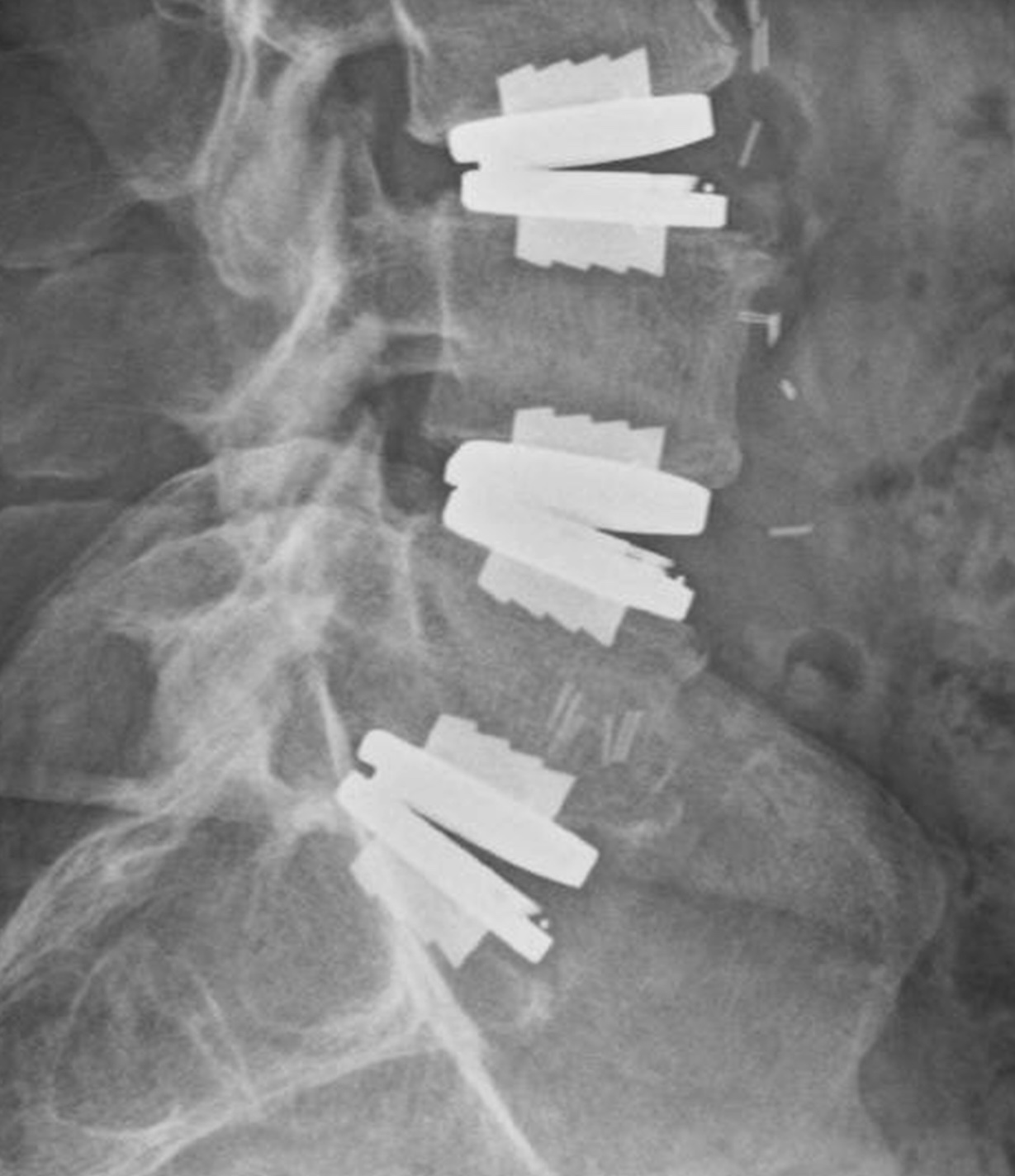 Post-op
At six weeks following surgery, the patient’s pain had improved from 9/10 to 2/10. A subsequent appointment with his pain management physician had been scheduled for a therapeutic spinal injection. However, by the time of evaluation, his symptoms had resolved to the extent that the injection was no longer indicated.
Successful motion preservation extends well beyond implant selection. It requires accurate diagnosis of every symptomatic level, appropriate patient selection, meticulous implant positioning, and reliable biological fixation.
Equally important, failure of a lumbar artificial disc replacement should not automatically be viewed as an indication for fusion. In carefully selected patients with preserved facet anatomy, revision arthroplasty remains a viable option that can correct implant-related failure, address previously untreated pathology, and preserve lumbar motion while avoiding the biomechanical consequences of multilevel fusion.
FOLLOW US ON SOCIAL MEDIA | @ADRSPINE