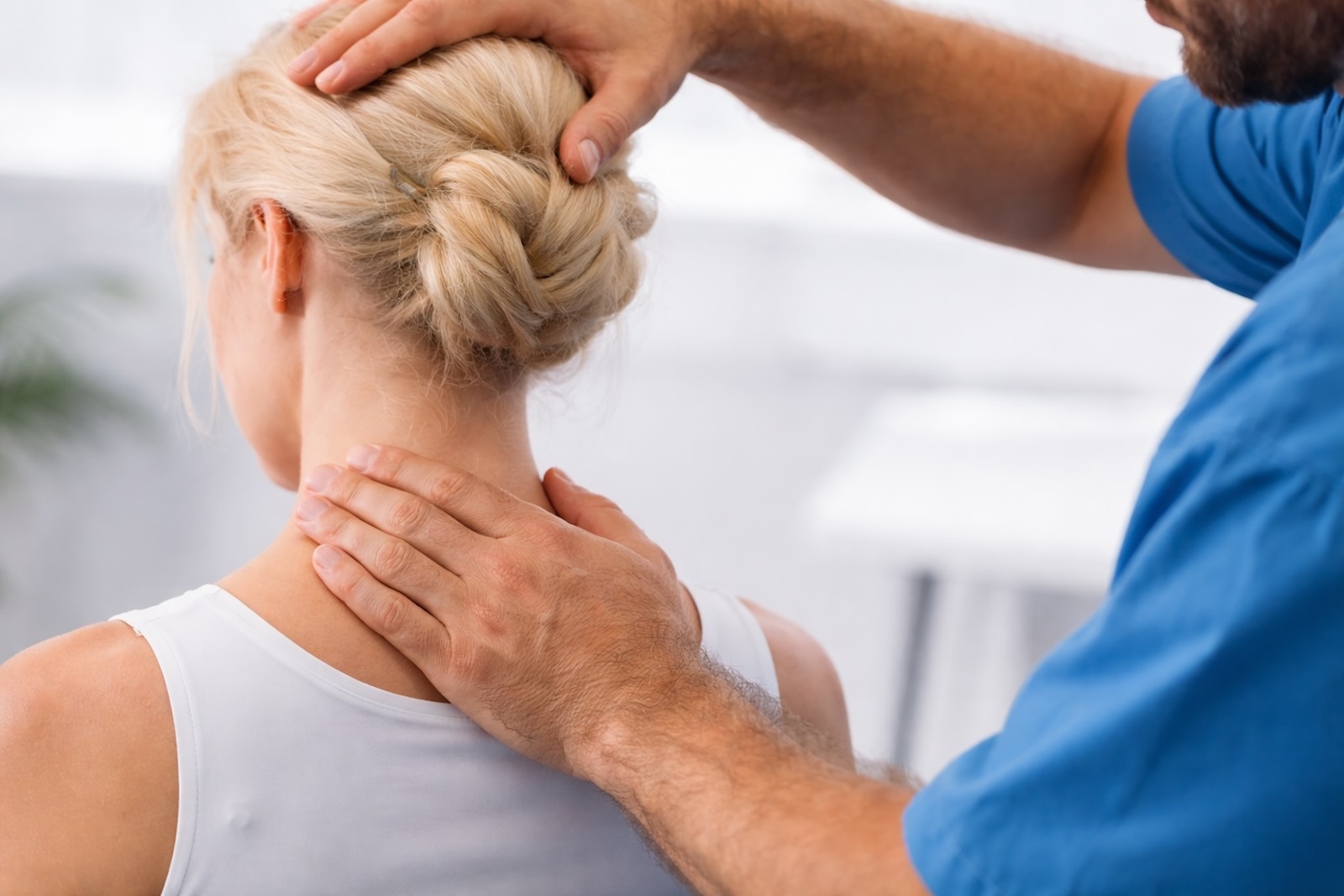
Radiating pain from your neck into your shoulder, arm, or hand may be more than a simple muscle issue. Cervical radiculopathy occurs when a nerve root in the cervical spine becomes compressed or inflamed, leading to symptoms like numbness, tingling, weakness, or burning pain.
Because this condition can worsen over time or significantly impact function, early evaluation is critical. At ADR Spine, patients receive care led by world-renowned spinal neurosurgeon Dr. Todd H. Lanman. With over 30 years of experience, Dr. Lanman is recognized as a pioneer in motion-preserving spine surgery, including cervical artificial disc replacement (ADR).
This article outlines the causes, symptoms, diagnostic process, and modern treatment options for cervical radiculopathy, helping patients understand their next step toward long-term relief.
The cervical spine consists of seven vertebrae (C1–C7). Nerve roots exit the spinal cord between these vertebrae, branching out to control sensation and motor function in the shoulders, arms, and hands. When one of these nerve roots becomes compressed, the resulting dysfunction is called cervical radiculopathy.
Common causes include disc herniation, degeneration, or structural narrowing (stenosis) that presses against the nerve. This pressure disrupts normal nerve signaling, causing pain, tingling, numbness, or weakness in areas served by the affected nerve.
The most frequently involved nerve roots are C5, C6, and C7. Each level corresponds to specific regions of the upper limb, so symptom location often gives clues to which nerve is affected.
A herniated disc occurs when the soft inner core of the disc pushes out through the tougher outer layer and compresses a nearby nerve root, a common cause in patients under 50.
Disc height loss, joint inflammation, and bony changes can narrow the spaces around nerve roots, leading to compression, which is more common in patients over 50.
Arthritic changes can lead to bone spur formation, which further encroaches on nerve pathways.
Spinal stenosis is a narrowing of the spinal canal or the foramen (the exit path for nerves), often caused by disc and joint degeneration.
Whiplash injuries, falls, or repetitive strain can damage cervical discs or accelerate existing degeneration.
Patients often describe a sharp, burning, or electric pain that starts in the neck and travels into the shoulder, arm, or fingers.
Pins-and-needles sensations often follow a dermatomal pattern (specific nerve distribution) in the arm or hand.
In more advanced cases, patients may struggle with lifting, gripping, or fine motor control in the hands or arms.
While not always severe, neck stiffness can accompany nerve compression and worsen with movement or poor posture.
Without treatment, nerve compression can lead to worsening pain or even permanent sensory and motor deficits.
A spine specialist will assess your posture, range of motion, reflexes, strength, and sensation to determine whether a cervical nerve is involved.
Electromyography (EMG) and nerve conduction studies may be ordered when the diagnosis is unclear or to rule out peripheral nerve disorders such as carpal tunnel syndrome, entrapment syndrome or neuropathy.
Specific exercises can reduce pressure on the affected nerve and improve posture and strength. Avoiding aggravating activities is also key.
Anti-inflammatory drugs (NSAIDs), short-term muscle relaxants, and nerve pain medications may be used to reduce symptoms.
Epidural steroid injections or selective nerve root blocks can help reduce inflammation and provide temporary relief.
Many patients experience significant improvement with conservative treatment over several weeks to months.
Surgery may be recommended if:
The primary goal is to decompress the nerve, relieve symptoms, and preserve or restore spinal stability and function.
This procedure replaces the damaged disc while preserving motion at the treated level. Clinical studies have shown that ADR can lead to faster recovery, less adjacent segment degeneration, and comparable or better long-term outcomes compared to fusion in appropriately selected patients.
A more traditional approach where the disc is removed, and the vertebrae are fused using a bone graft and hardware, eliminating motion at the affected level.
In some instances, a foraminotomy or decompression performed from the back of the neck may be appropriate, especially if multiple levels are involved.
ADR maintains mobility and may reduce future stress on adjacent discs. Fusion may be preferred in cases with significant instability, multi-level disease, or contraindications to ADR.
With early intervention and the right treatment plan, most patients experience significant symptom relief and improved function.
Patients trust ADR Spine for its leadership in motion-preserving spine surgery.
How do I know if my arm pain is coming from my neck?
If your symptoms follow a nerve distribution and worsen with neck movement, cervical radiculopathy may be the cause. Pain almost always shoots into the inside edge of the shoulder blade.
Can cervical radiculopathy heal on its own?
In many cases, symptoms improve with time and conservative care. However, persistent or worsening symptoms should be evaluated.
How long does nerve recovery take?
Pain relief may be fast, but numbness or weakness can take months, depending on the severity and duration of compression.
When is surgery necessary?
Surgery is considered when conservative treatment fails or if significant weakness or nerve damage is present.
Is ADR better than fusion?
For appropriate candidates, ADR offers faster recovery and motion preservation. However, fusion may be preferred in complex or unstable cases.
If neck pain, arm numbness, or weakness is interfering with your daily life, cervical radiculopathy may be the underlying cause. At ADR Spine, Dr. Lanman leads a team committed to delivering modern, motion-preserving solutions tailored to your anatomy and goals. Schedule your consultation in Beverly Hills, Palm Beach, Miami, Austin, Paducah, St. Louis, Reston, or Marina Del Rey to explore your options for lasting relief.
FOLLOW US ON SOCIAL MEDIA | @ADRSPINE