
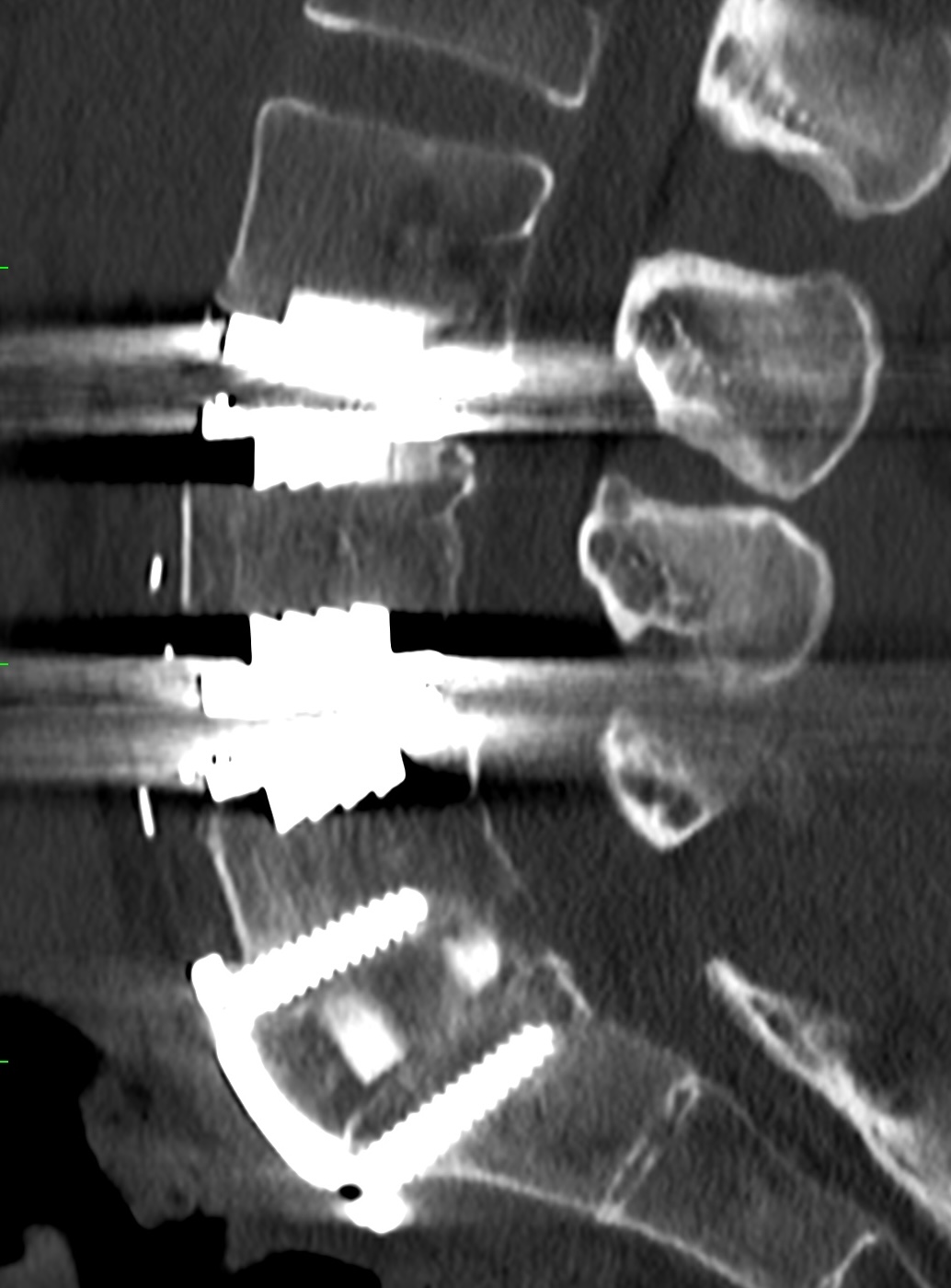
A 32-year-old woman presented with a three-year history of severe low back pain and left-sided lumbar radiculopathy following a prior L5-S1 fusion. She rated her low back pain as 8/10 and her leg pain as 9/10. Her symptoms had become profoundly debilitating, limiting her ability to stand for prolonged periods and resulting in long-term dependence on prescribed opioid medication. At presentation, she was taking approximately 20 mg of oxycodone four times daily to manage her pain.
Despite undergoing lumbar fusion followed by implantation of a spinal cord stimulator, she experienced little meaningful improvement in either pain or function.
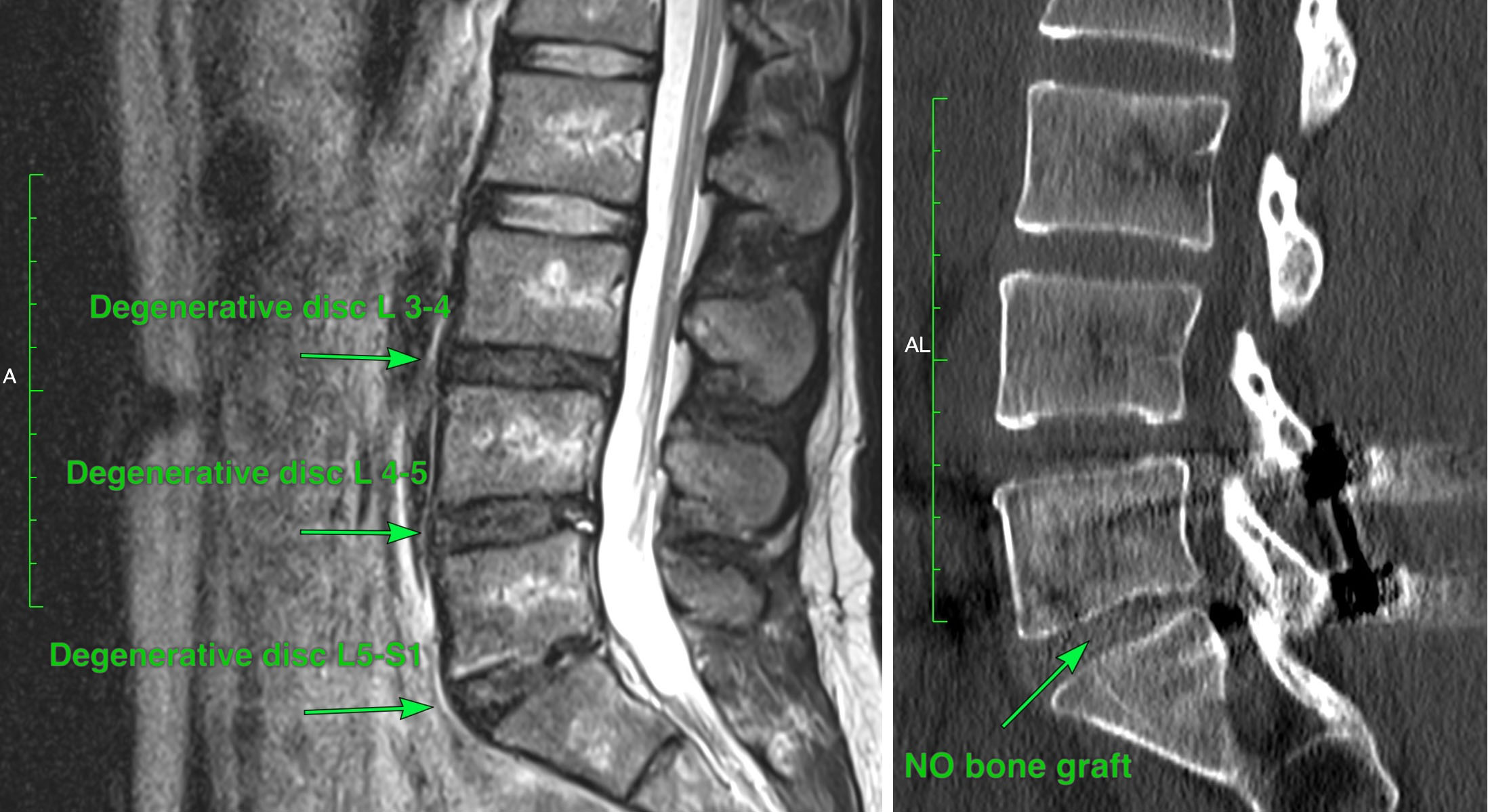 Pre-op Lateral View
Comprehensive imaging demonstrated a symptomatic pseudoarthrosis at L5-S1, with minimal evidence of osseous fusion across the interbody space.
Further evaluation identified two additional pain generators that had not been addressed during the index procedure. At L4-5, a large annular tear with left-sided neural compression correlated with her radicular symptoms. At L3-4, advanced disc degeneration contributed to her persistent mechanical low back pain.
The combination of pseudoarthrosis, persistent neural compression, and untreated adjacent-level degenerative disease explained the failure of prior surgical intervention, spinal cord stimulation, and escalating pharmacologic management.
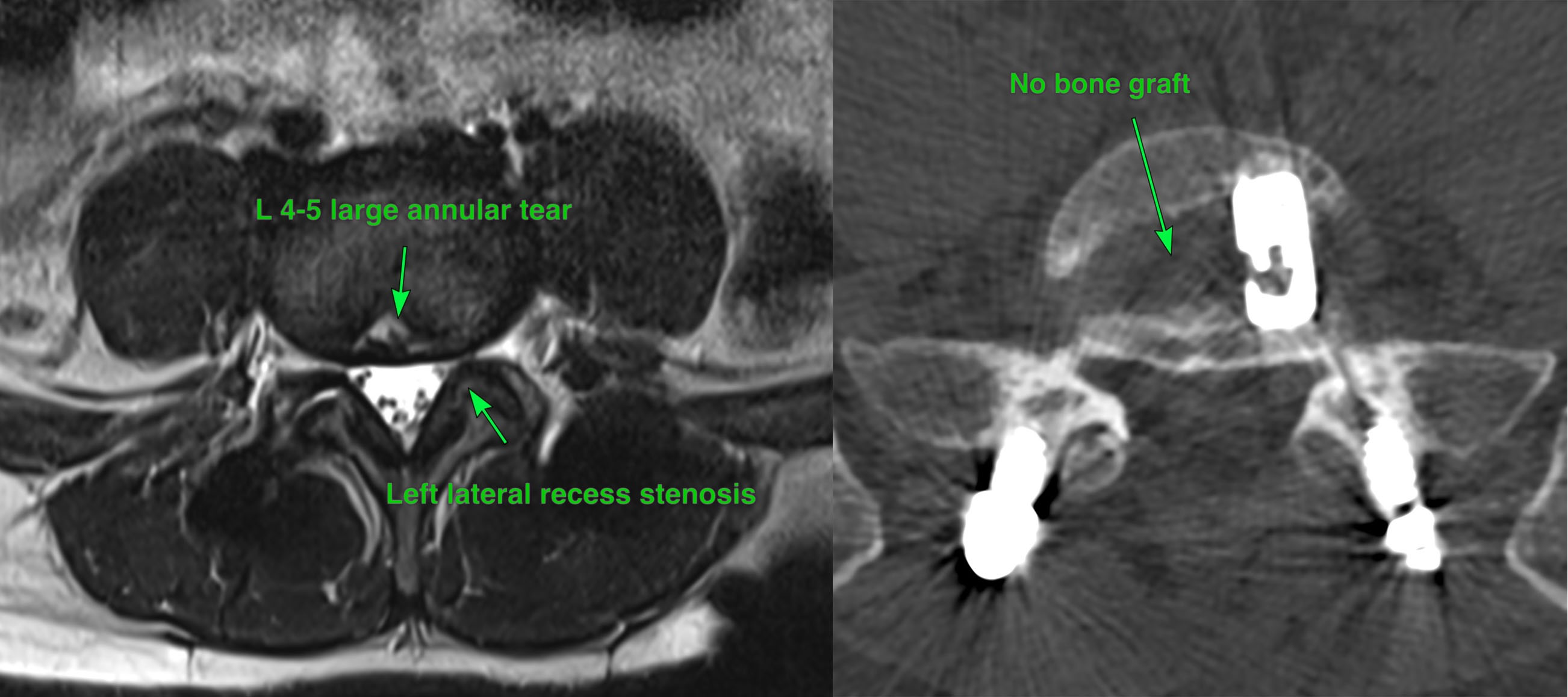 Pre-op Axial View
The patient underwent comprehensive revision surgery consisting of removal of the prior posterior instrumentation and spinal cord stimulator, revision of the failed L5-S1 fusion, decompression of the affected nerve root, and lumbar artificial disc replacement at L3-4 and L4-5.
This hybrid reconstruction restored stability at the level requiring fusion while preserving motion at the adjacent lumbar segments, addressing all symptomatic pathology in a single procedure.
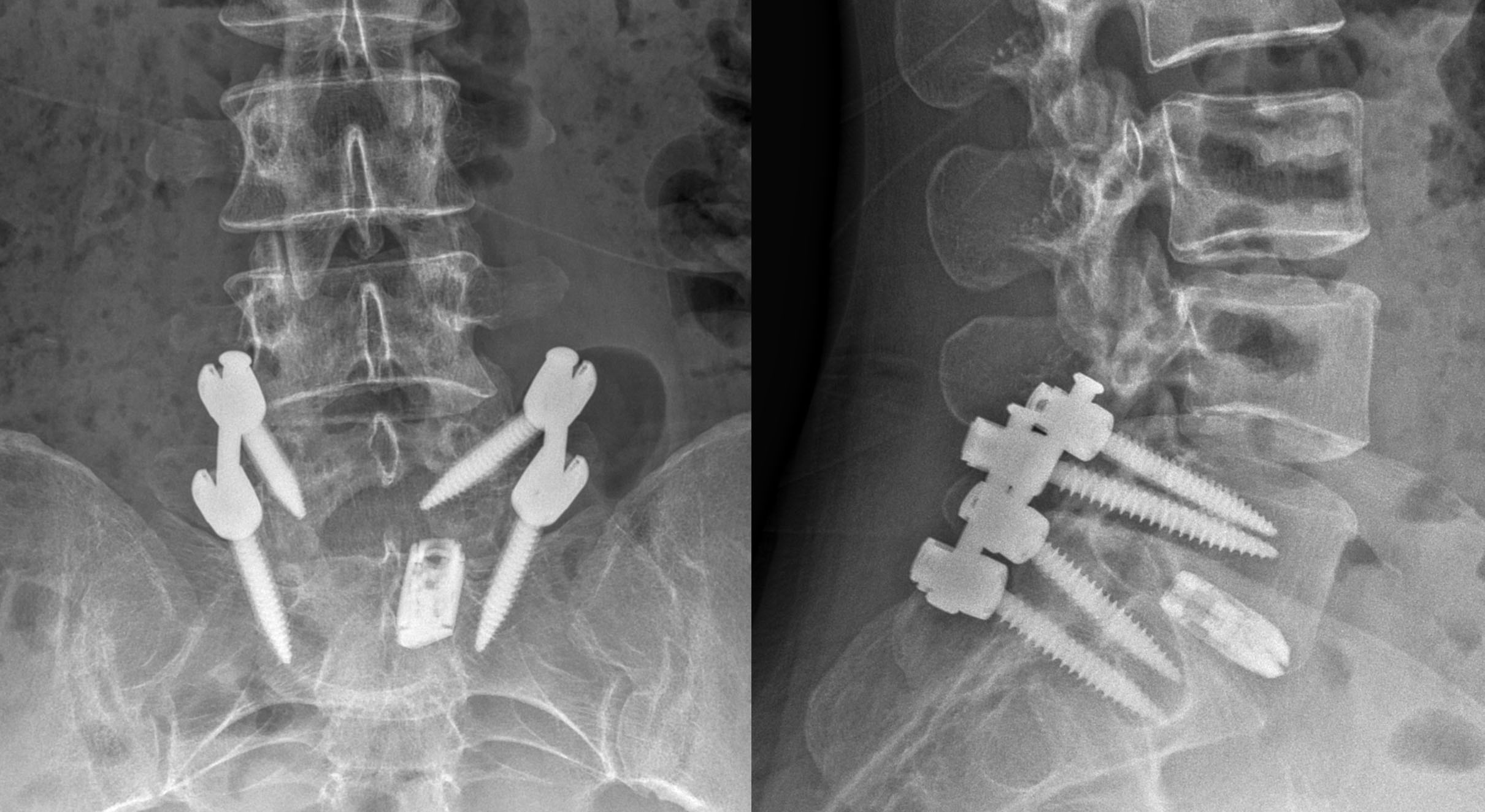 Pre-op X-Ray
By three months postoperatively, the patient reported substantial improvement in both axial back pain and radicular symptoms.
Equally significant, she had reduced her oxycodone requirements from approximately 80 mg per day to 20 mg per day, decreasing from 20 mg four times daily to 10 mg twice daily, with continued tapering under medical supervision.
She is now on a measurable path toward improved function, reduced reliance on opioid therapy, and restoration of quality of life.
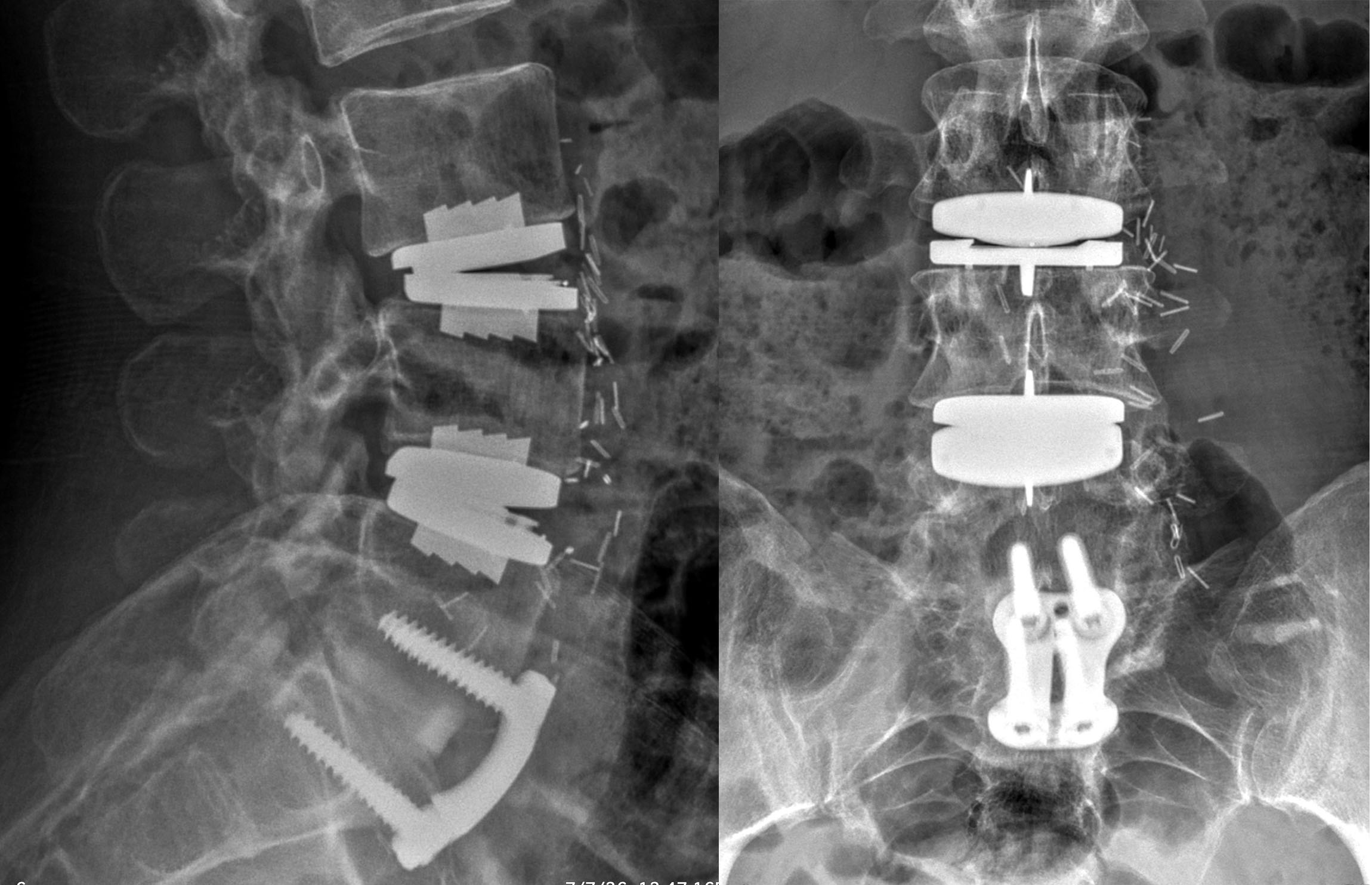 Post-op X-Ray
Persistent pain following spine surgery should prompt a comprehensive reassessment of the underlying structural pathology rather than an escalation of symptom-directed treatment alone.
In this case, identifying the symptomatic pseudoarthrosis, persistent neural compression, and previously untreated adjacent-level degeneration allowed us to address the true pain generators. The result was not only meaningful improvement in pain and function, but also the opportunity to significantly reduce long-term opioid Dependence.
Successful revision spine surgery requires more than correcting a failed procedure—it requires understanding why the initial operation failed and treating every clinically significant source of pathology.
FOLLOW US ON SOCIAL MEDIA | @ADRSPINE